Teach Plot Like a Screenwriter
Plot is commonly taught as exposition, rising action, climax or turning point, falling action, and resolution. It is presented in a shape resembling:
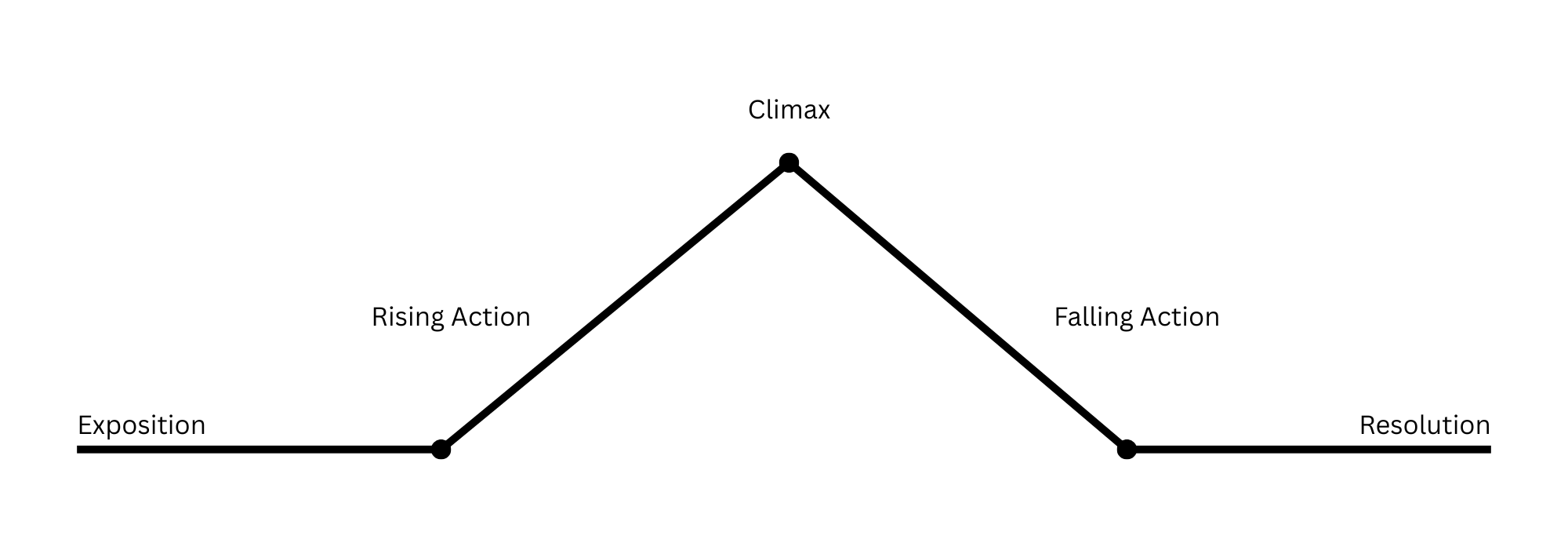
In some ways, this model can be helpful for teaching younger students a very basic understanding of story structure. But if we want our students to confidently approach complex stories, the 5-step model does not hold up.
Hear me out.
This five step model assumes that all stories have an easily identifiable conflict a character is facing, who then returns to where he/she began–achieving balance–after the conflict is resolved. In truth, stories and characters don’t end how they begin. And if they did, characters would be flat and stories boring.
In truth, stories and characters follow a projection more like the following.
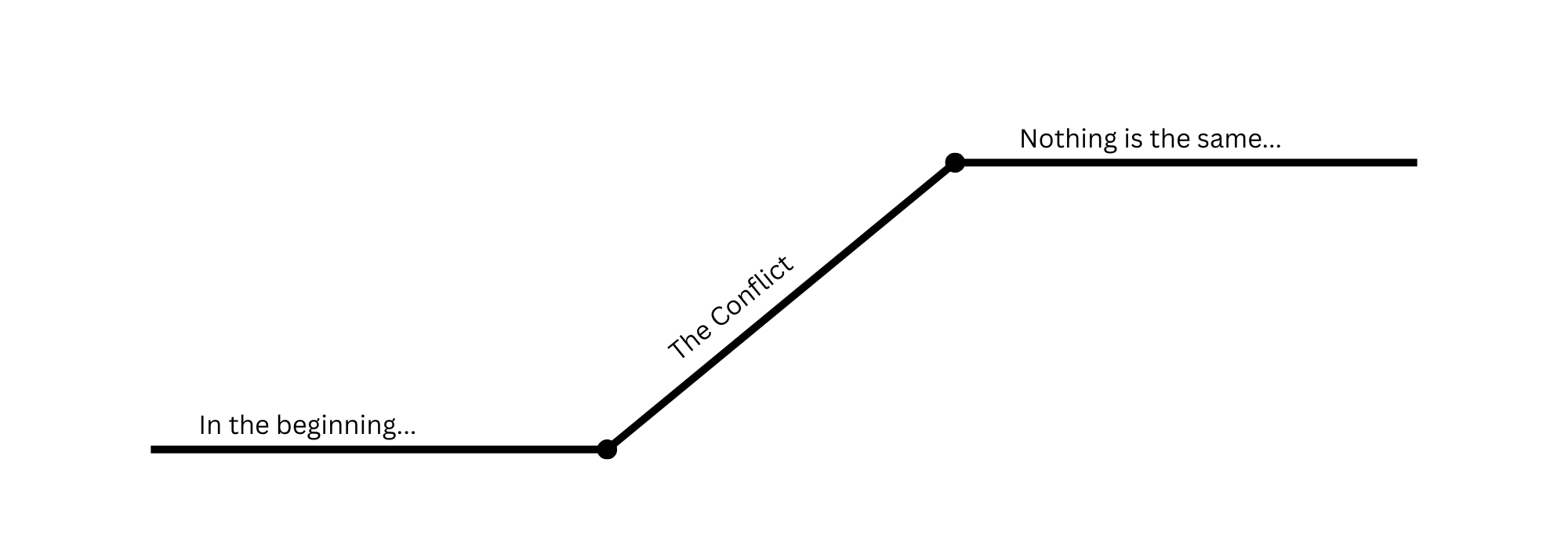
Characters are not the same by the end of their trials. Usually the setting does not revert back to “normal” and the conflicts don’t magically reset everything else.
One of the goals of storytelling is to allow characters to change and grow by the end of the book. By teaching plot using Dave Trottier’s 7 Magnificent Plot Points, we can dive deeper into stories, analyze characters, setting, conflict, and help students break down the essential elements of good writing.
Trottier’s 7 Magnificent Plot Points
In Trottier’s book “The Screenwriter’s Bible” he goes into depth on each of the seven plot points:
Backstory
Catalyst
Big Event
Midpoint
Crisis
Showdown
Realization
After reading his book, I kept the 7 plot points in mind as I read books and watched movies, analyzing each story carefully to see if his model worked. And, it did. They are in everything we consume!
I then used Trottier’s method to teach plot to 10th graders and the feedback from students was incredible. We applied the plot points to short stories, summer reading novels, and movies. Throughout my five sections, more than 80% of students said the 7 plot points helped them to better understand what was happening in their books and said they got more out of it than if we had just briefly discussed plot using the five-step method.
Not only was their feedback exciting, but the students thoughtfully discussed the plot points of their texts, even disagreeing and arguing about the placement of different moments within the story (and providing evidence to support their claims!). They were able to disagree, discuss, and rearrange their understanding of the books in order to draw a comprehensive outline of the character’s story from beginning to end.
These plot points also opened doors to discuss the way plot itself is integrated into stories. Not all plot lines are linear and we were able to piece together the character’s stories by drawing on what was presented throughout the book. We broke up the plot points on notecards and discussed the impact of non-linear plot lines by physically rearranging them. In every lesson of our unit, I witnessed in-depth thinking and I loved having the opportunity to listen to my students discuss and challenge each other.
I will forever teach plot using these seven plot points. Integrate them into your classroom and see what doors it opens for your students!
Happy teaching.
Intrigued but not sure where to start? Check out my Plot in 7 Steps resource on TPT. It includes posters of each plot stage, notes pages, and several specific strategies about how and what to teach to really make plot shine.